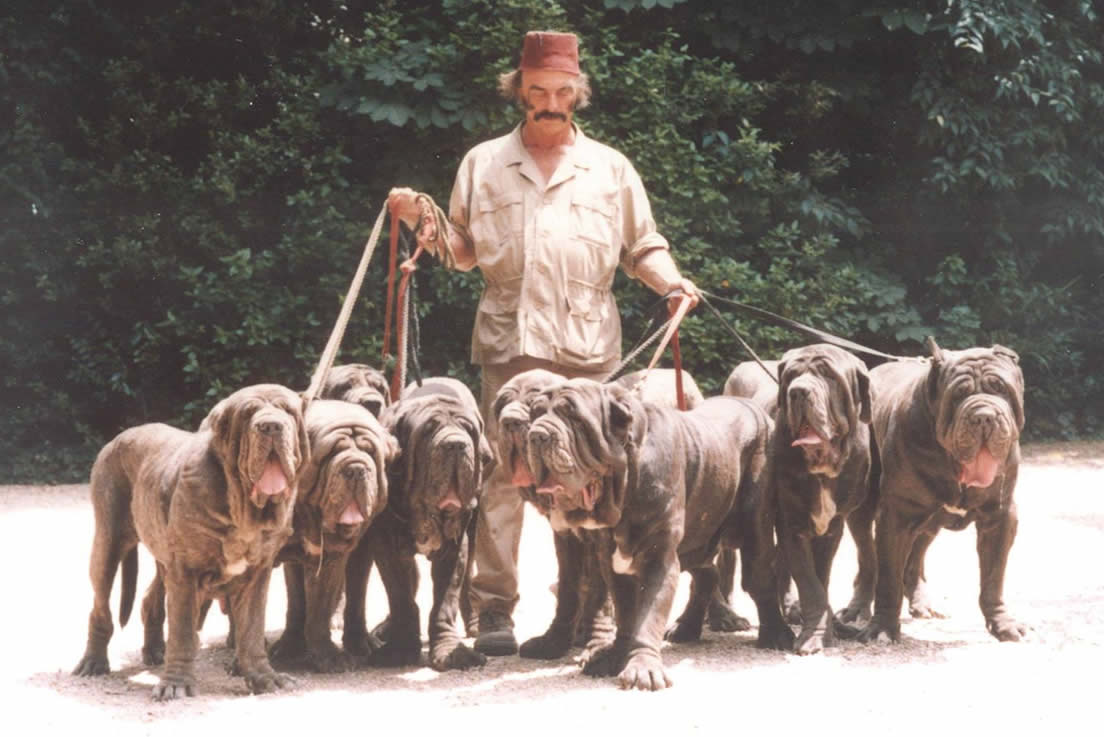
In the collective imagination, the Roman dog appears as a gigantic mastiff, the ancestor of modern Dogues, Mastiffs, Neapolitan Mastiffs, and Cane Corsos, thrown into battle to spread terror.
Dr. Vito Branco, DVM, is a veterinarian in Italy. He writes on topics related to the history and reality of dogs in Roman antiquity, combining ancient literary sources and archaeological evidence. His work focuses on clarifying myths and emphasizing practical uses and functions of dogs rather than romanticized legends.
Education
Information about his formal education beyond the DVM degree (Doctor of Veterinary Medicine) is not publicly available.
It is a powerful image that has crossed novels, paintings, and films, but it belongs more to the taste of the 19th century than to historical truth. The Romans were practical, ruthless, and concrete: what emerges from the sources and archaeology is a less spectacular story, but much more fascinating.
The term canis pugnax was not the name of a breed. In Latin, pugnax means "inclined to fight": it was a qualification, not a pedigree. The Romans did not know standards as we understand them today; they distinguished dogs by origin — the Molossus of Epirus, already famous in Greece; the Briton dog, feared for its ferocity; the Laconian, agile and Spartan — or by function: villaticus for guarding houses and camps, venaticus for hunting, pastoralis for herding. No dog lived for beauty: only utility mattered.
Literary sources speak to us with the clear voice of antiquity. Virgil, in the Georgics (III, 404-405), writes:
"Spartae genus acre, molossusque robustus custodes, armantque truces villisque feruntur."
(“The Spartan puppy, and the robust Molossus as a guardian, armed with fierceness, are raised for the houses.”)
It is the advice of a poet-farmer: raise large and brave dogs to defend the fields, not to lead assaults in battle.
Grattio Falisco, in the Cynegeticon (1st century AD), looks instead at the Britons:
"Quid referam Celtas, quibus est fiducia tanta virtutis, validos quamvis etiam in bella Britannos? … cum Marte vocante / terribiles acies hostesque subire parati."
(“What can be said of the Celts, who have such confidence in the valor of their dogs, and of the Britons, powerful even in war? … when Mars calls, ready to face the terrible enemy ranks.”)
This is the most explicit passage: foreign dogs, not Roman, but valued even in war.
Columella, in De re rustica (VII, 12), does not tell legends:
"Optime pascitur farina hordeacea, lactis quoque serum utilissimum est… reliqua vitia, sicut in ceteris animalibus praecepimus, curanda sunt."
(“The dog feeds excellently on barley flour; even whey is very useful… the other ailments, as with other animals, must be treated.”)
A nearly prosaic passage: diet and veterinary care. Far from the myth, within the reality of the guard dog.
Archaeology confirms this sobriety. In Roman forts and villages, remains of dogs of all sizes appear: small tent companions, medium dogs as fast as greyhounds, large and robust for guarding. At Vindolanda, along Hadrian's Wall, imposing specimens were found alongside more modest dogs. Some bore boar bite scars: a sign of hunting, not war. Studded collars testify to use against predators, not battle armor.
Images are rare and ambiguous. On the Column of Marcus Aurelius, two large dogs appear on a soldier's leash during the sacking of a village: they probably served to flush out fugitives, not fight on the front lines. On the Arch of Galerius in Thessalonica, a dog accompanies a horseman in a triumphal procession. No iconography shows dogs thrown into battle: the myth arises centuries later.
Dogs existed in the legions, but in small numbers, a few dozen per unit. Their role was silent: guardians of tents and storerooms, night sentinels, protectors of livestock, aids in hunting. Companions to the legionaries rather than “living weapons.” And when they failed, discipline was relentless: as in 390 BC, when the dogs of the Capitoline, guilty of not raising the alarm, were crucified, while the geese that saved Rome were celebrated.
Typologically, we must imagine a mosaic: small dogs for companionship and pest control, medium and fast for hunting, large and powerful for guarding. The pugnaces were the most suitable for defense, chosen for character and reliability. They were not arena monsters, but resilient, trained, disciplined animals.
As for legacy, no modern breed descends directly from the canes pugnaces. But along the consular roads and frontier garrisons, Roman dogs mixed with local ones, sowing seeds that over the centuries would grow into German Rottweilers, Swiss Cattle Dogs, large Gallic guard dogs, up to the Dogue de Bordeaux. In Italy, the countryside long preserved molossoid guard dogs, fixed only in modern times as Cane Corso and Neapolitan Mastiff: not direct descendants of the Roman dog, but heirs to a mentality, a use, a function.
The canis pugnax was never a military unit, nor a breed. It was a working dog, valuable like the mule and the horse, a silent companion to the Roman machine. Its legacy lives not in the legend of armored mastiffs, but in the continuity of an ancient task as old as man: to guard, serve, endure.
By Dr. Vito Branco DVM
CANIS PUGNAX: TRA MITO E REALTÀ
Nella fantasia collettiva il cane dei Romani appare come un mastino gigantesco, progenitore dei Dogue, dei Mastiff, dei Mastini Napoletani e dei Cani Corso moderni, scagliato nelle battaglie per seminare terrore. È un’immagine potente, che ha attraversato romanzi, dipinti e film, ma appartiene più al gusto dell’Ottocento che alla verità storica. I Romani furono pratici, spietati e concreti: ciò che emerge dalle fonti e dall’archeologia è una storia meno spettacolare, ma molto più affascinante.
Il termine canis pugnax non era il nome di una razza. In latino pugnax significa “portato alla lotta”: era una qualifica, non un pedigree. I Romani non conoscevano gli standard come li intendiamo oggi; distinguevano i cani per provenienza — il molosso d’Epiro, famoso già in Grecia; il cane britanno, terribile per ferocia; il laconico, agile e spartano — o per funzione: villaticus per la guardia delle case e degli accampamenti, venaticus per la caccia, pastoralis per la custodia delle greggi. Nessun cane viveva per la bellezza: contava soltanto l’utilità.
Le fonti letterarie ci parlano con la voce limpida dell’antichità. Virgilio, nelle Georgiche (III, 404-405), scrive:
"Spartae genus acre, molossusque robustus custodes, armantque truces villisque feruntur."
(Il cucciolo spartano, e il molosso robusto come custode, armati di fierezza vengono allevati per le case.)
È il consiglio di un poeta-contadino: allevare cani grandi e coraggiosi per difendere i campi, non per condurre assalti in battaglia.
Grattio Falisco, nel Cynegeticon (I sec. d.C.), guarda invece ai Britanni:
"Quid referam Celtas, quibus est fiducia tanta virtutis, validos quamvis etiam in bella Britannos? … cum Marte vocante / terribiles acies hostesque subire parati."
(Che dire dei Celti, che tanto si fidano del valore dei loro cani, e dei Britanni, potenti anche in guerra? … quando Marte chiama, pronti ad affrontare le terribili schiere dei nemici.)
È il passo più esplicito: cani stranieri, non romani, ma apprezzati persino in guerra.
Columella, nel De re rustica (VII, 12), non racconta leggende:
"Optime pascitur farina hordeacea, lactis quoque serum utilissimum est… reliqua vitia, sicut in ceteris animalibus praecepimus, curanda sunt."
(Il cane si nutre ottimamente con farina d’orzo; anche il siero del latte è utilissimo… le altre malattie, come per gli altri animali, devono essere curate.)
Un passo quasi prosaico: alimentazione e cure veterinarie. Lontano dal mito, dentro la realtà del cane da guardia.
E l’archeologia conferma questa sobrietà. Nei forti e nei villaggi romani compaiono resti di cani di ogni taglia: piccoli compagni da tenda, medi veloci come levrieri, grandi e robusti per la guardia. A Vindolanda, lungo il Vallo di Adriano, sono stati ritrovati esemplari imponenti accanto a cani più modesti. Alcuni portavano cicatrici di morsi di cinghiale: segno di caccia, non di guerra. Collari chiodati testimoniano l’uso contro i predatori, non certo armature da battaglia.
Le immagini sono rare e ambigue. Sulla Colonna di Marco Aurelio due grossi cani appaiono al guinzaglio di un soldato durante il saccheggio di un villaggio: probabilmente servivano a stanare fuggitivi, non a combattere in prima linea. Sull’arco di Galerio, a Tessalonica, un cane accompagna un cavaliere in un corteo trionfale. Nessuna iconografia mostra cani lanciati in battaglia: il mito nasce secoli dopo.
Nelle legioni i cani c’erano, ma erano pochi, qualche decina per reparto. Il loro compito era silenzioso: guardiani delle tende e dei magazzini, sentinelle notturne, protettori del bestiame, ausili nella caccia. Compagni dei legionari più che “armi viventi”. E quando fallivano, la disciplina era implacabile: come nel 390 a.C., quando i cani del Campidoglio, rei di non aver dato l’allarme, furono crocifissi, mentre le oche che salvarono Roma vennero celebrate.
Tipologicamente, dobbiamo immaginare un mosaico: piccoli cani per compagnia e controllo dei parassiti, medi e rapidi per la caccia, grandi e possenti per la guardia. I pugnaces erano i più adatti alla difesa, scelti per carattere e affidabilità. Non erano mostri da arena, ma animali resistenti, addestrati, disciplinati.
Quanto all’eredità, nessuna razza moderna discende direttamente dai canes pugnaces. Ma lungo le strade consolari e le guarnigioni di frontiera, i cani romani si mescolarono con quelli locali, gettando semi che nei secoli germoglieranno nei Rottweiler tedeschi, nei Bovari svizzeri, nei grandi cani da guardia galli, fino al Dogue de Bordeaux. In Italia, le campagne hanno custodito a lungo cani molossoidi da guardia, fissati solo in epoca moderna come Cane Corso e Mastino Napoletano: non figli diretti del cane romano, ma eredi di una mentalità, di un uso, di una funzione.
Il canis pugnax non fu mai un’unità militare, né una razza. Fu un cane da lavoro, prezioso come il mulo e il cavallo, compagno silenzioso della macchina romana. La sua eredità non vive nella leggenda dei mastini corazzati, ma nella continuità di un compito antico quanto l’uomo: custodire, servire, resistere.